One-line summary
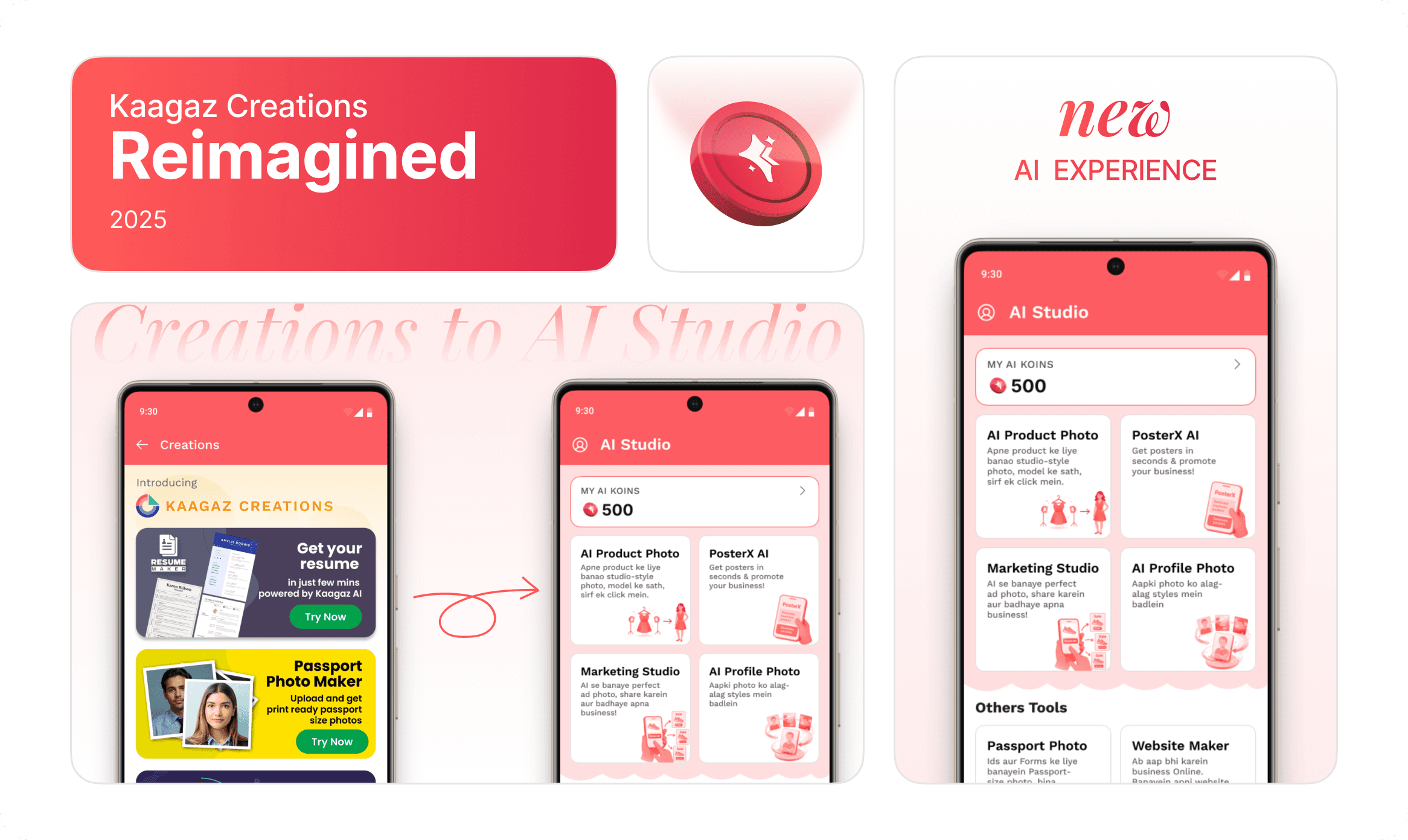
Reimagined a low-trust utility surface into a clear AI Studio, improving engagement, repeat usage, and paid conversions.
Role & Responsibility
Product Designer (End-to-End Ownership), Led problem framing, UX strategy, IA redesign, interaction design, visual system, and monetization experience in close collaboration with PM and engineering.
Timeline
Year
Team
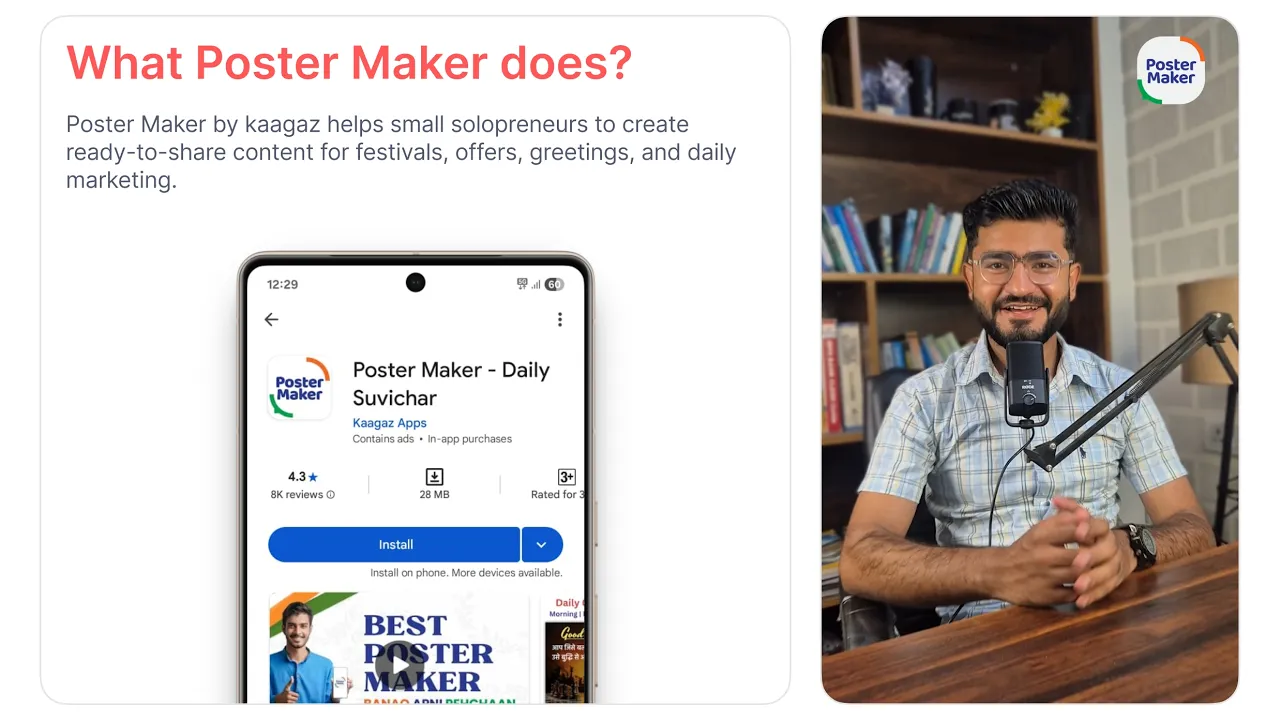
Context (About Poster Maker):
The Core Problem:
How the problem emerged?
Creations wasn’t a wrong idea.
It was built as a place to surface useful utilities inside the Poster Maker app; resume tools, scanners, photo helpers. On paper, it made sense.
But as Poster Maker started moving towards AI-powered creation, Creations couldn’t scale with that vision.
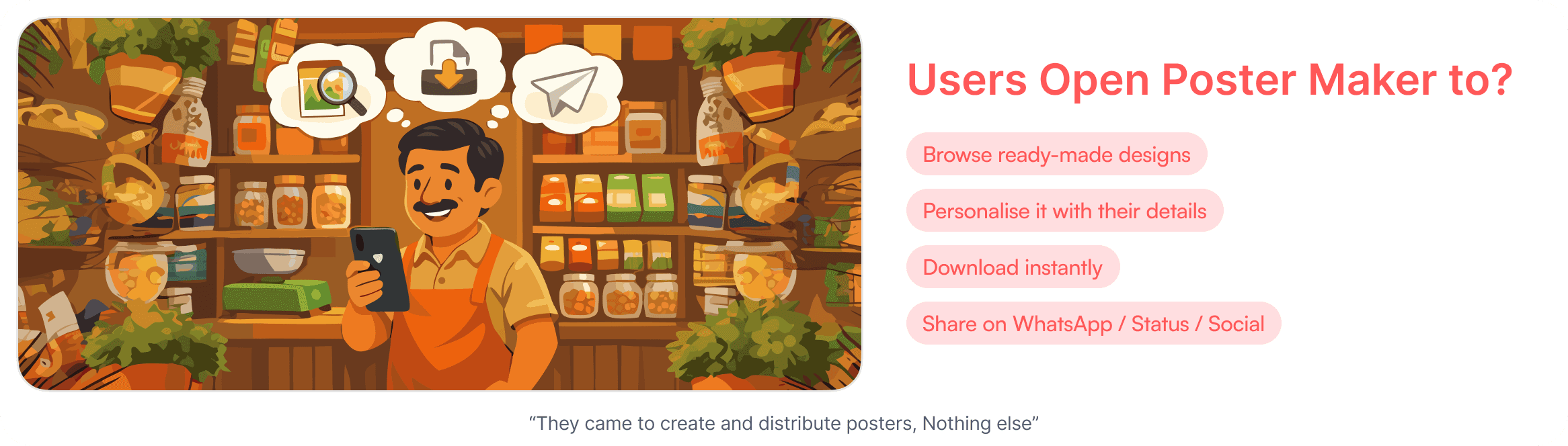
Users came to Poster Maker with a clear intent - Browse, download, or share posters daily
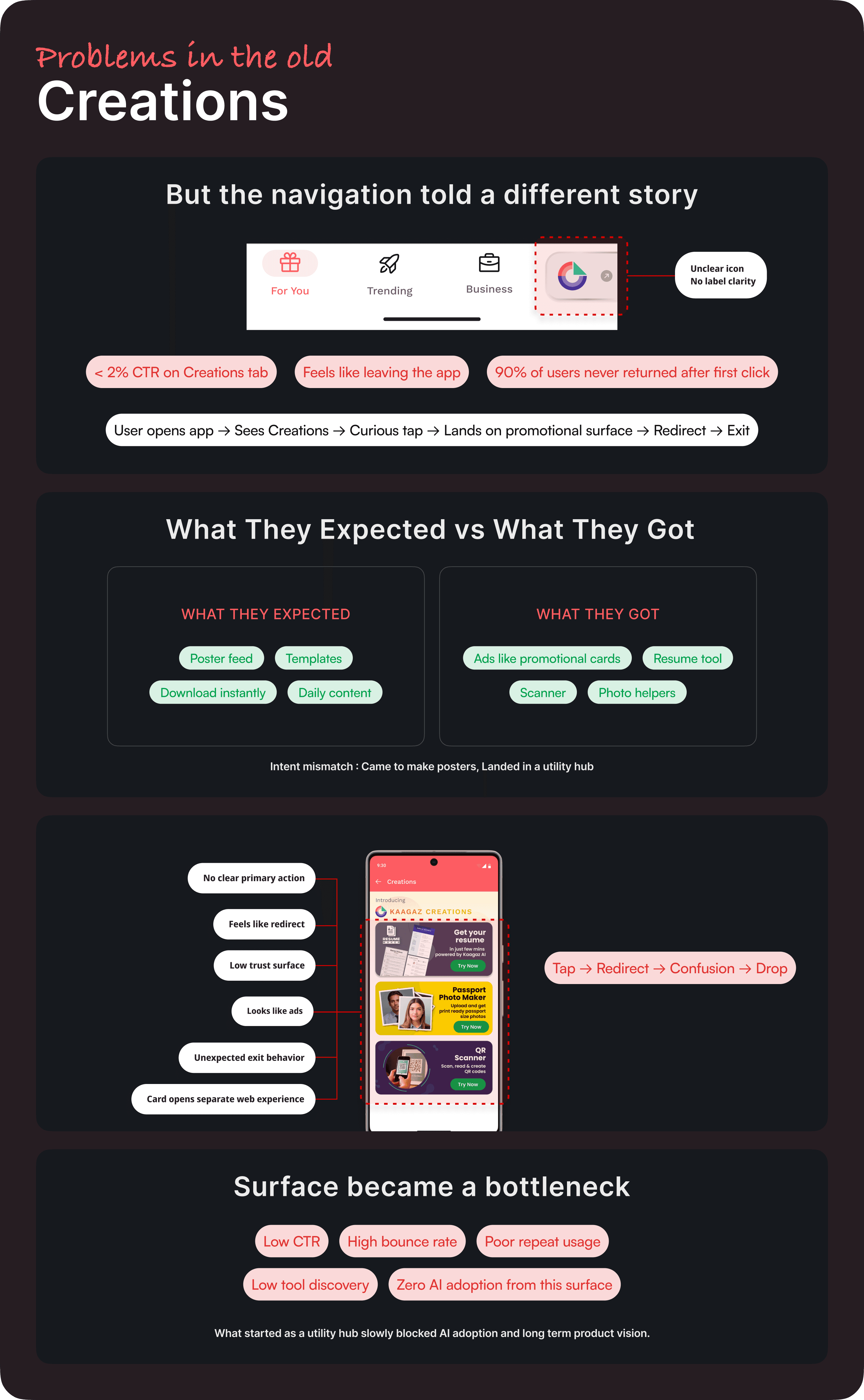
Instead, they landed on a screen that felt promotional, unfamiliar, and disconnected from their workflow.
What started as a utility surface slowly became a bottleneck for: trust, discovery and, company’s AI roadmap
That’s when the cracks started showing up clearly.
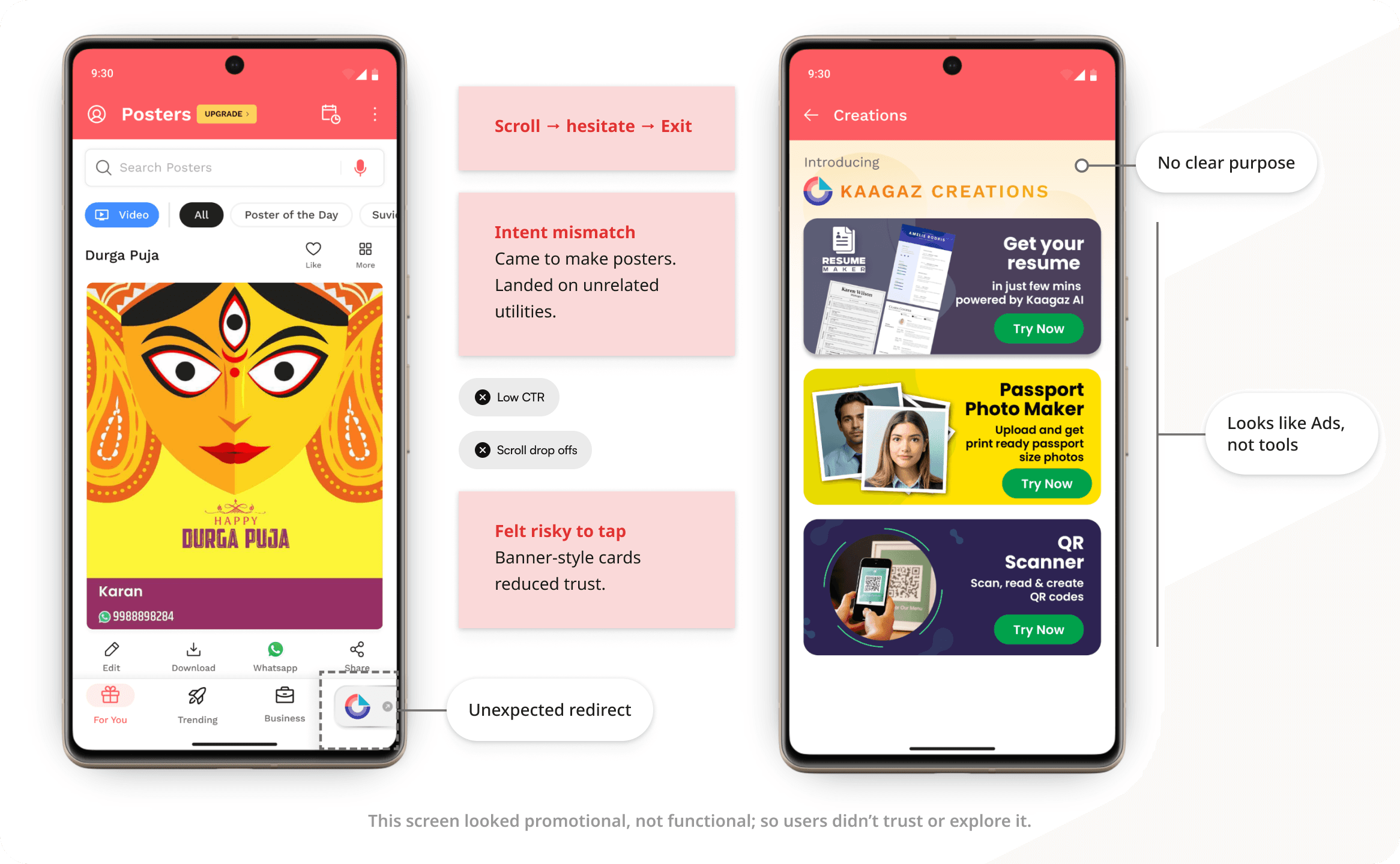
Introducing studio (v1) : Moving from Creations to Studio
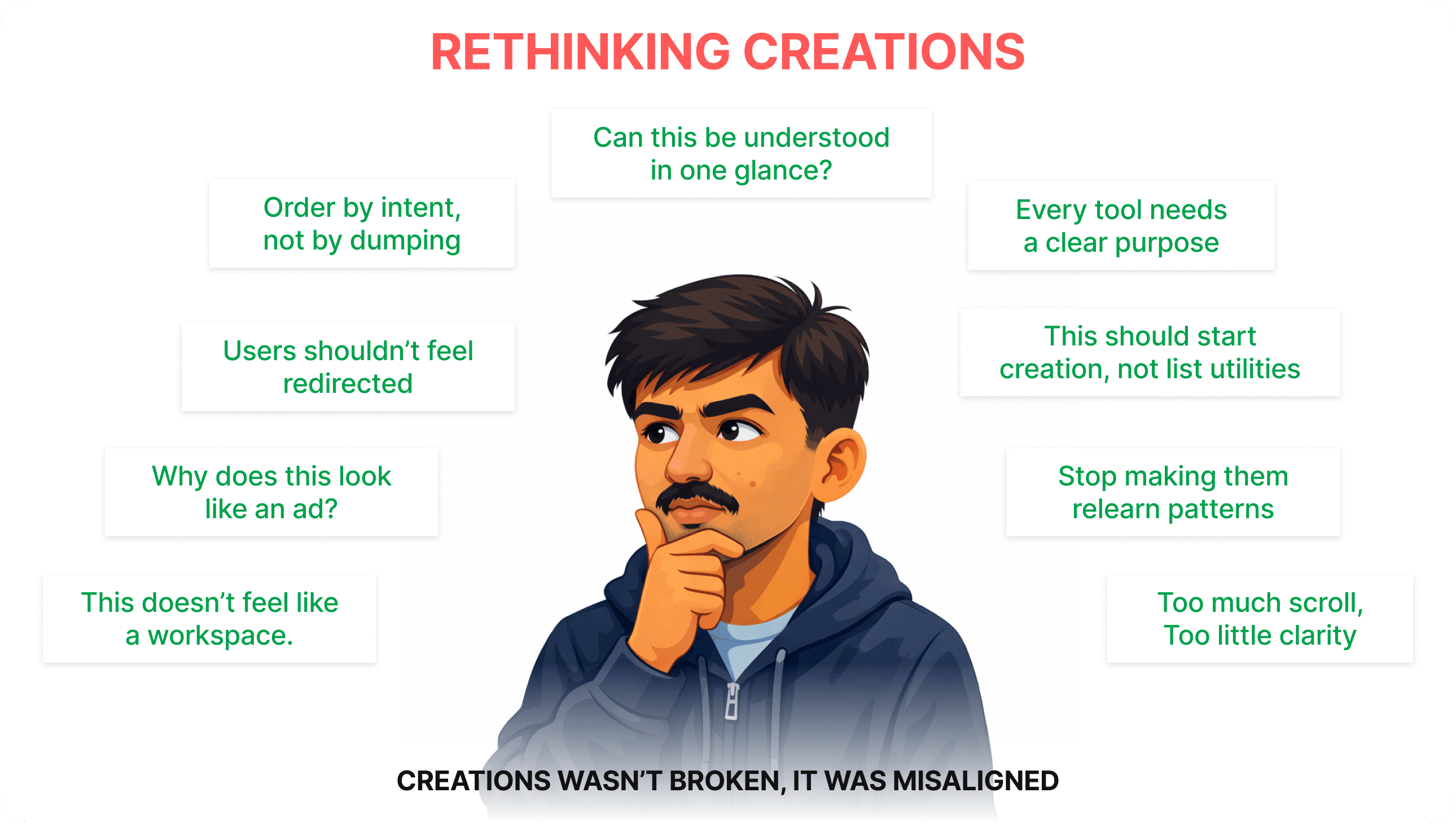
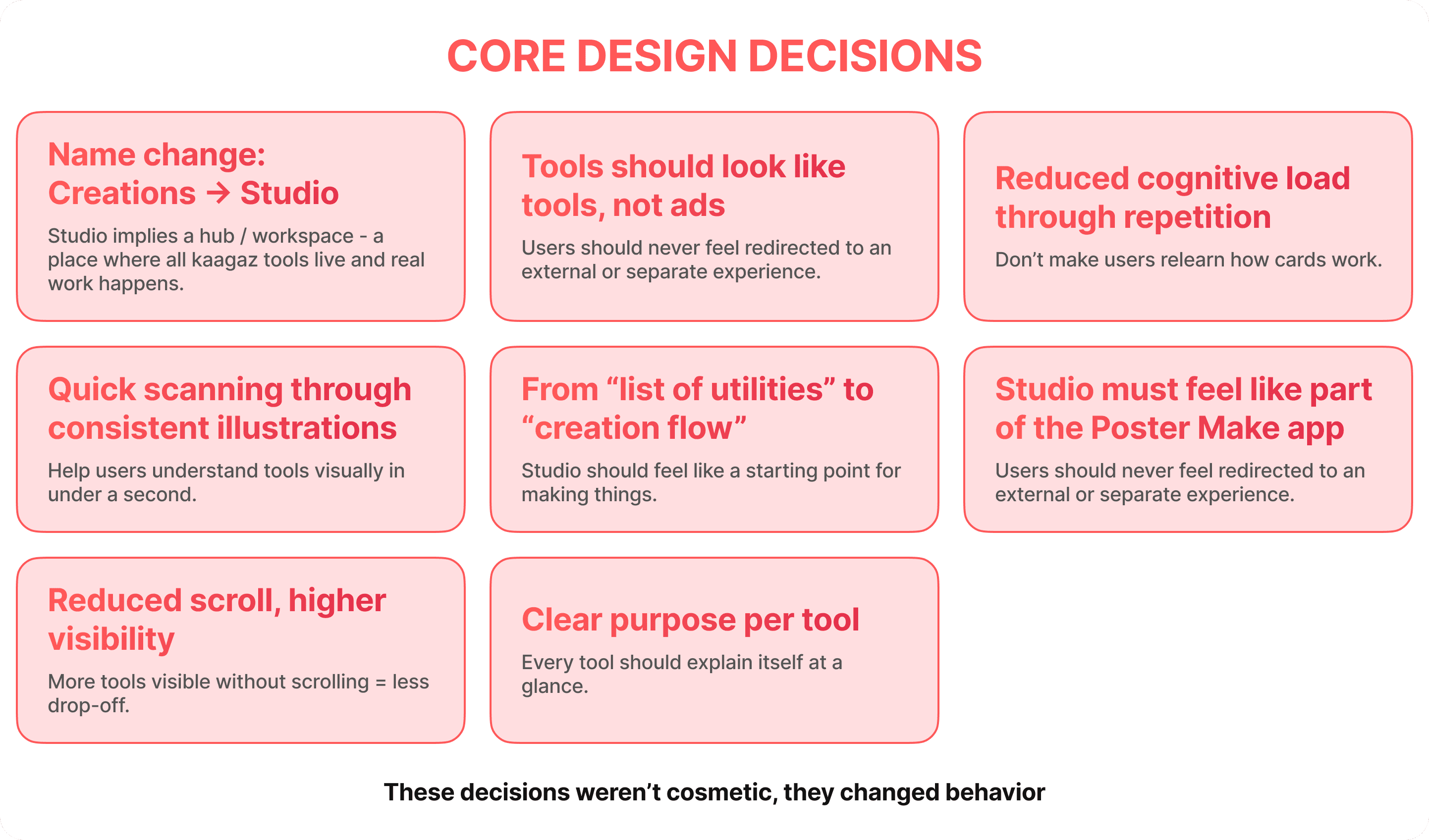
Direction for Studio:

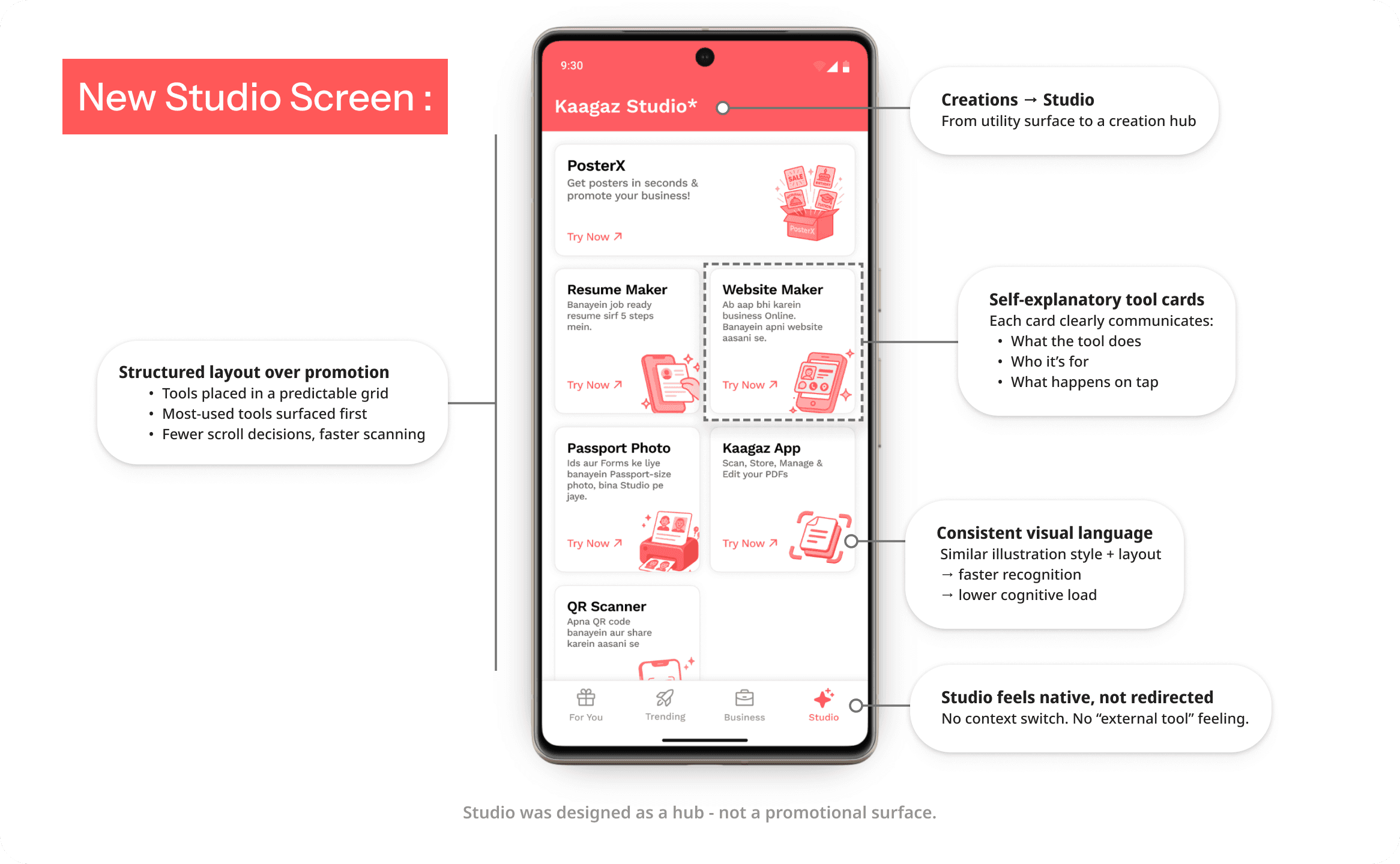
What Improved With Studio ?

What Studio failed to solve?
After a few months, engagement reached a saturation point. This helped us see deeper issues that UI alone could not fix.
Studio v1 was good enough to fix discoverability…but not good enough to support a growing set of AI tools.
The product was shifting towards AI-driven creation,but the screen wasn’t ready to communicate that identity or scale with that direction.
As we started adding more AI tools (like Travel studio, Product Studio, including PosterX), Studio began showing stress:

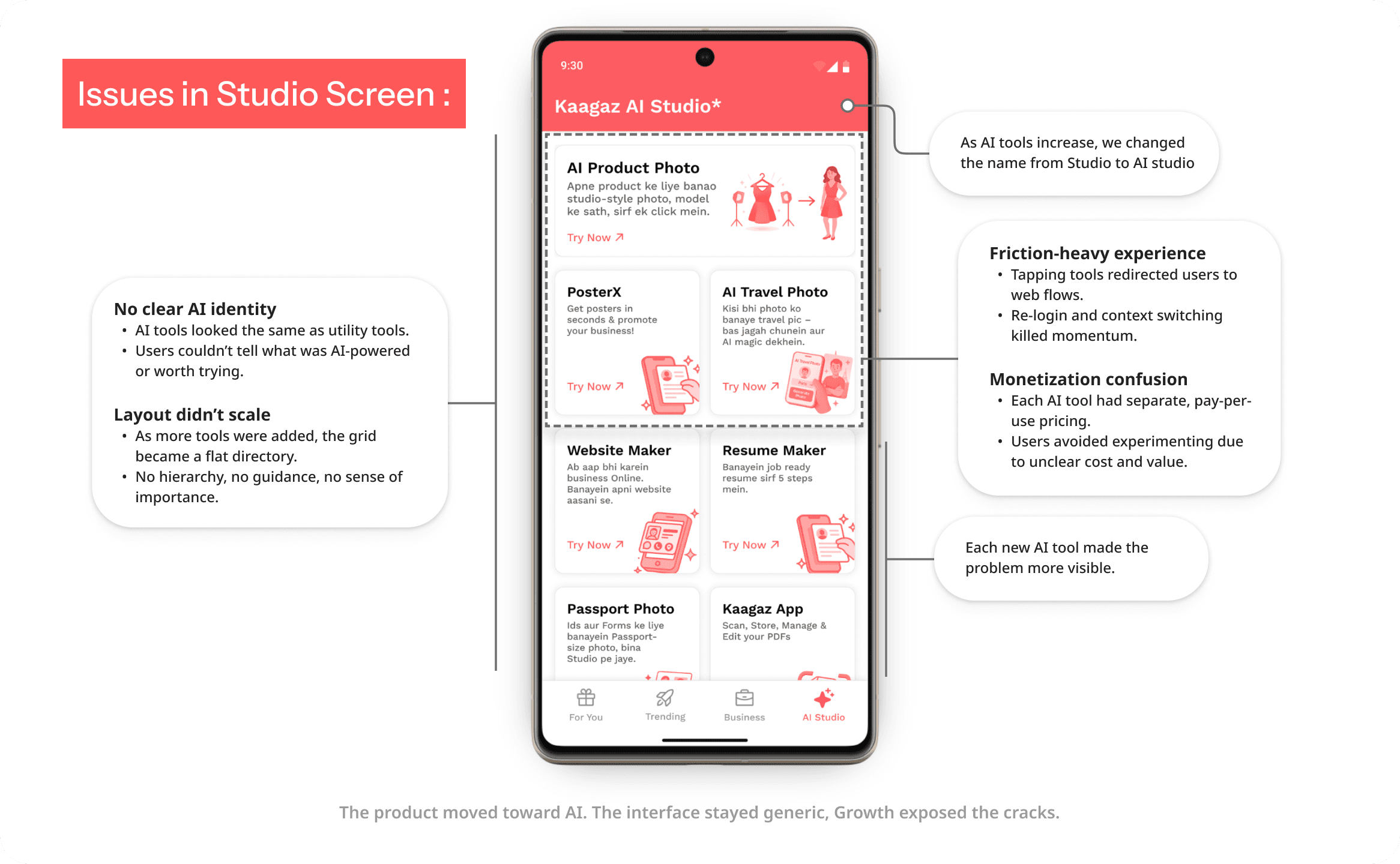
This led to extended problem:
“How do we turn Studio into a clear, AI-first creation hub that users trust, understand, and pay for?”
Studio solved its job but revealed that the next job was much bigger.
Strategize & Designing AI Studio (v2)
Studio helped users discover tools, but it couldn’t support our growing direction toward AI-driven creation.
To fix the deeper issues, we needed to redesign not just the UI - but the identity, structure, pricing model, and workflow of the entire screen.
Key Trade-off Decisions
Every improvement came with constraints. Here’s what we chose to prioritize and what we consciously didn’t.
Single shared currency vs per-tool pricing
We chose: One shared currency (Koins) across all AI tools
We gave up: Tool-level pricing optimisation and short-term revenue tuningWhy ?
Predictability and user confidence mattered more for long-term revenue growth than maximising short term revenue per action.
Multiple prices created hesitation and fear of “wasting money,” which reduced experimentation. A single currency encouraged exploration, repeat usage, and ultimately higher lifetime value.Immediate feature exposure vs controlled adoption
We chose: Gradual exposure of AI tools
We gave up: Pushing every new AI tool aggressively to all usersWhy ?
Aggressive promotion could have increased short-term CTR.
We chose controlled exposure to avoid overwhelming users who came for simple poster workflows.This sacrifices growth spikes in favour of retention stability.
Simplicity for users vs internal complexity
We chose: Simple mental model for users
We gave up: Simpler internal logicWhy ?
Koins, unified flows, and native AI tools increased internal complexity: Events tracking usage & Syncing balances. We accepted internal complexity so users didn’t have to think.
Let's see how we tackled studio's problems:
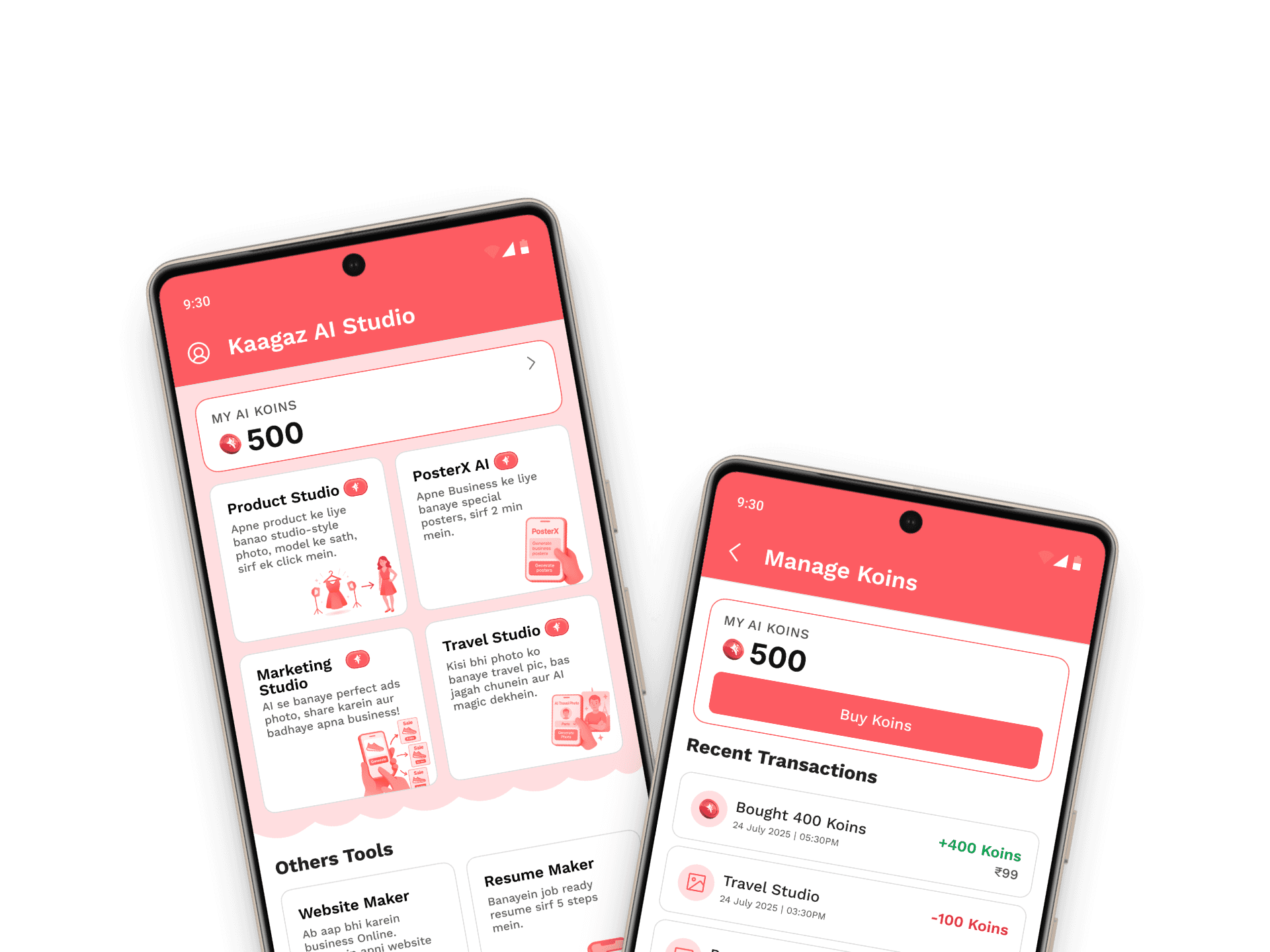
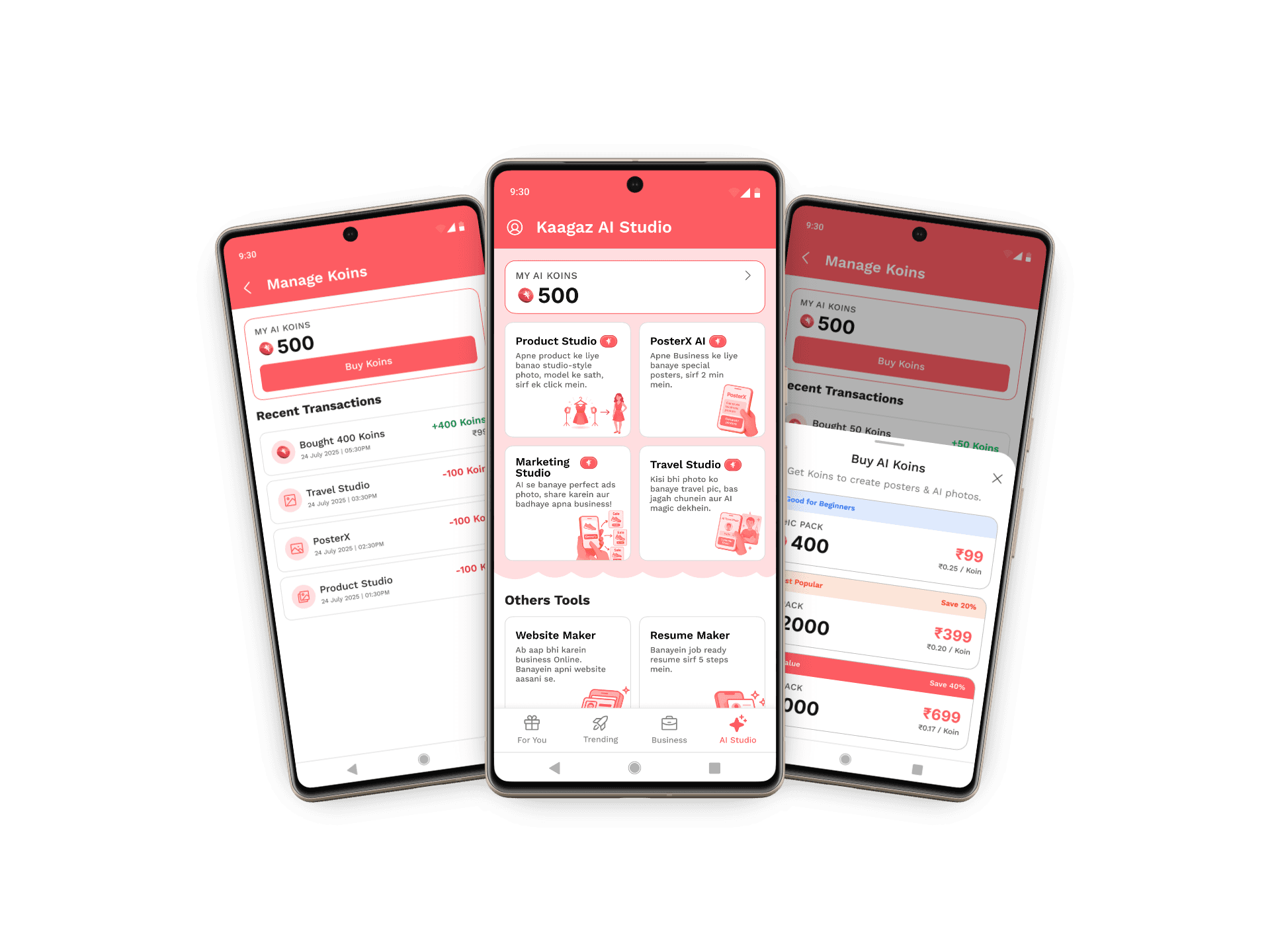
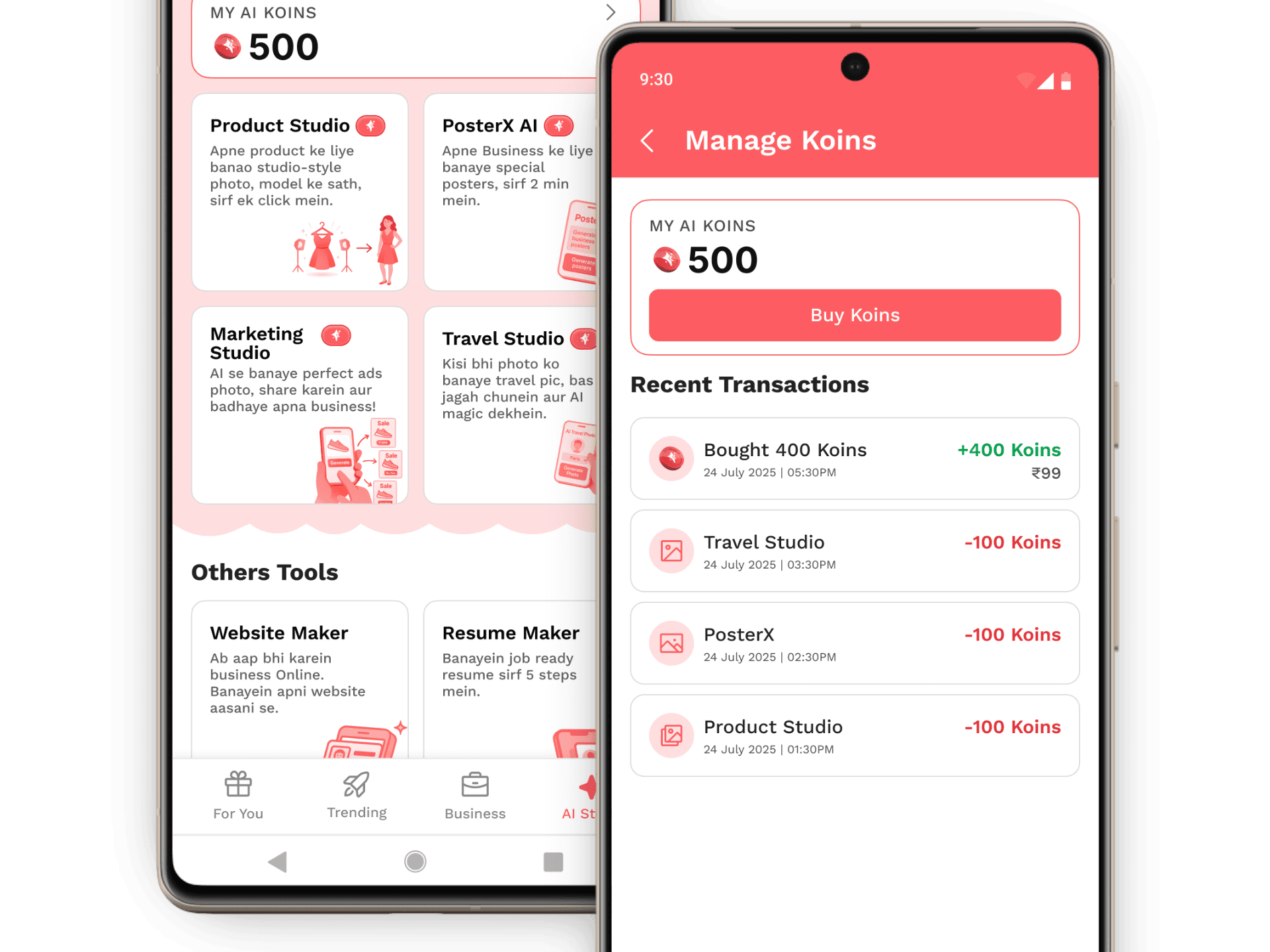
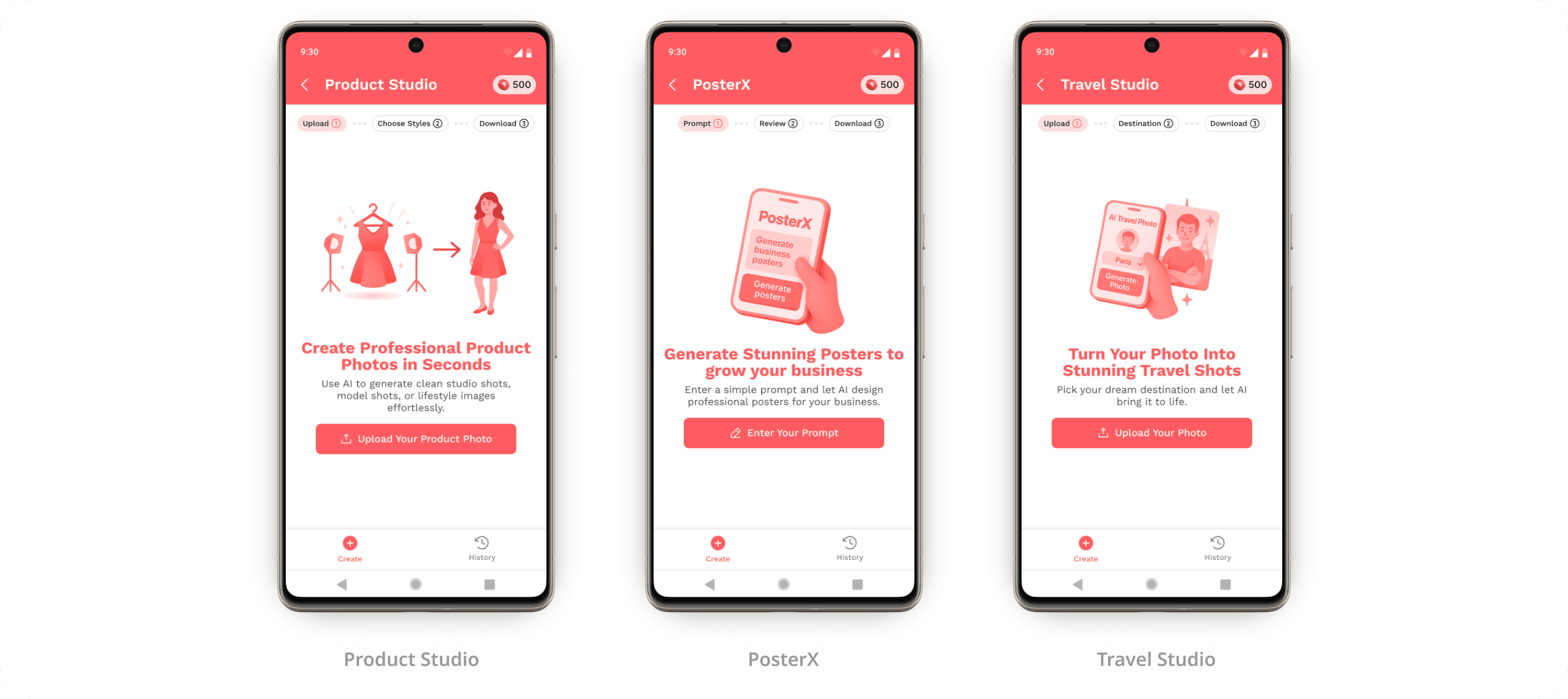
Integrated all AI tools natively inside the app
The biggest drop-offs came from external web redirects. So we removed them completely.


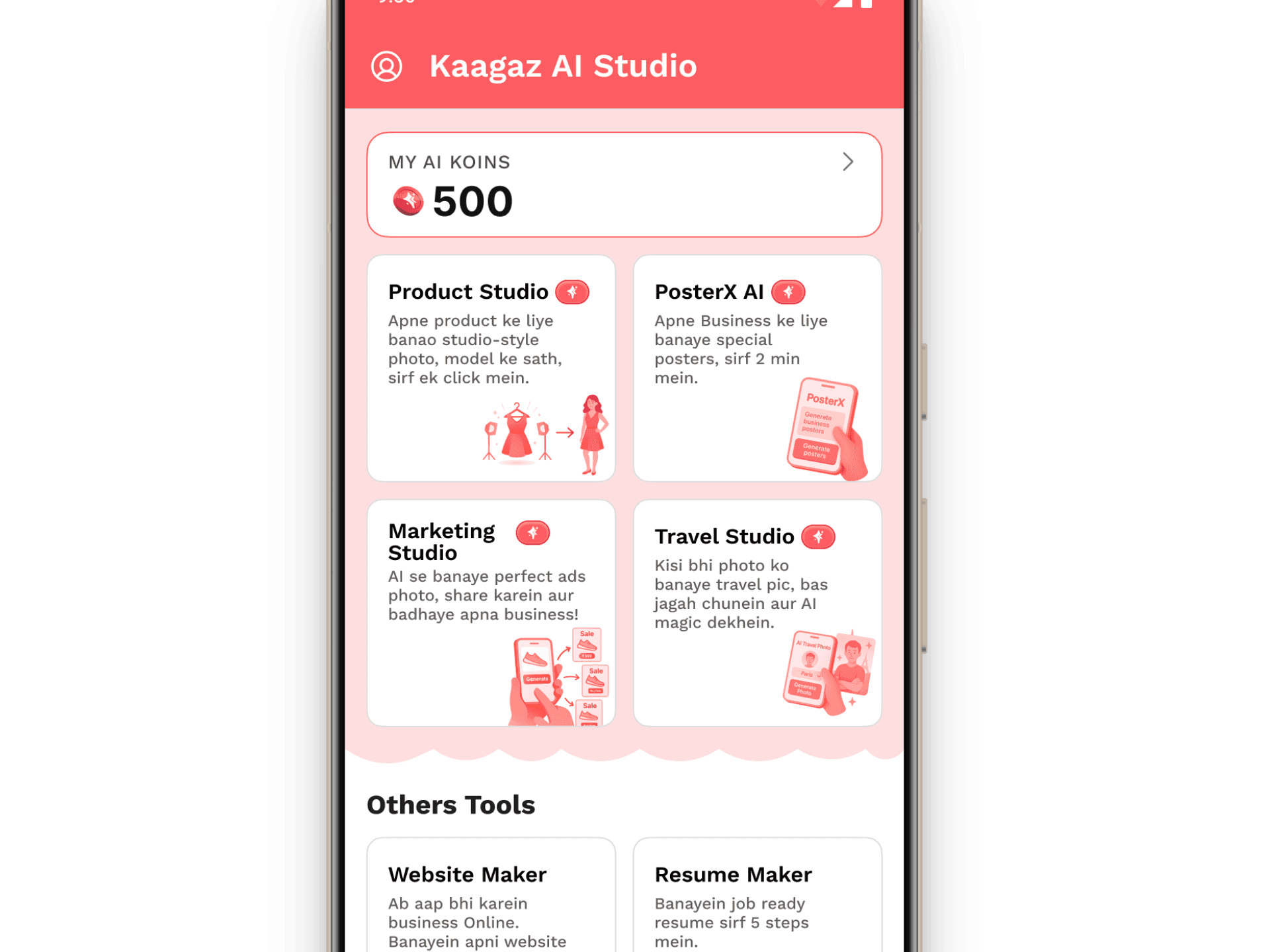
Gave AI tools a clear identity
AI tools looked identical to non-AI tools in Studio. Users couldn’t tell what was powered by AI, what was special, or where to start.


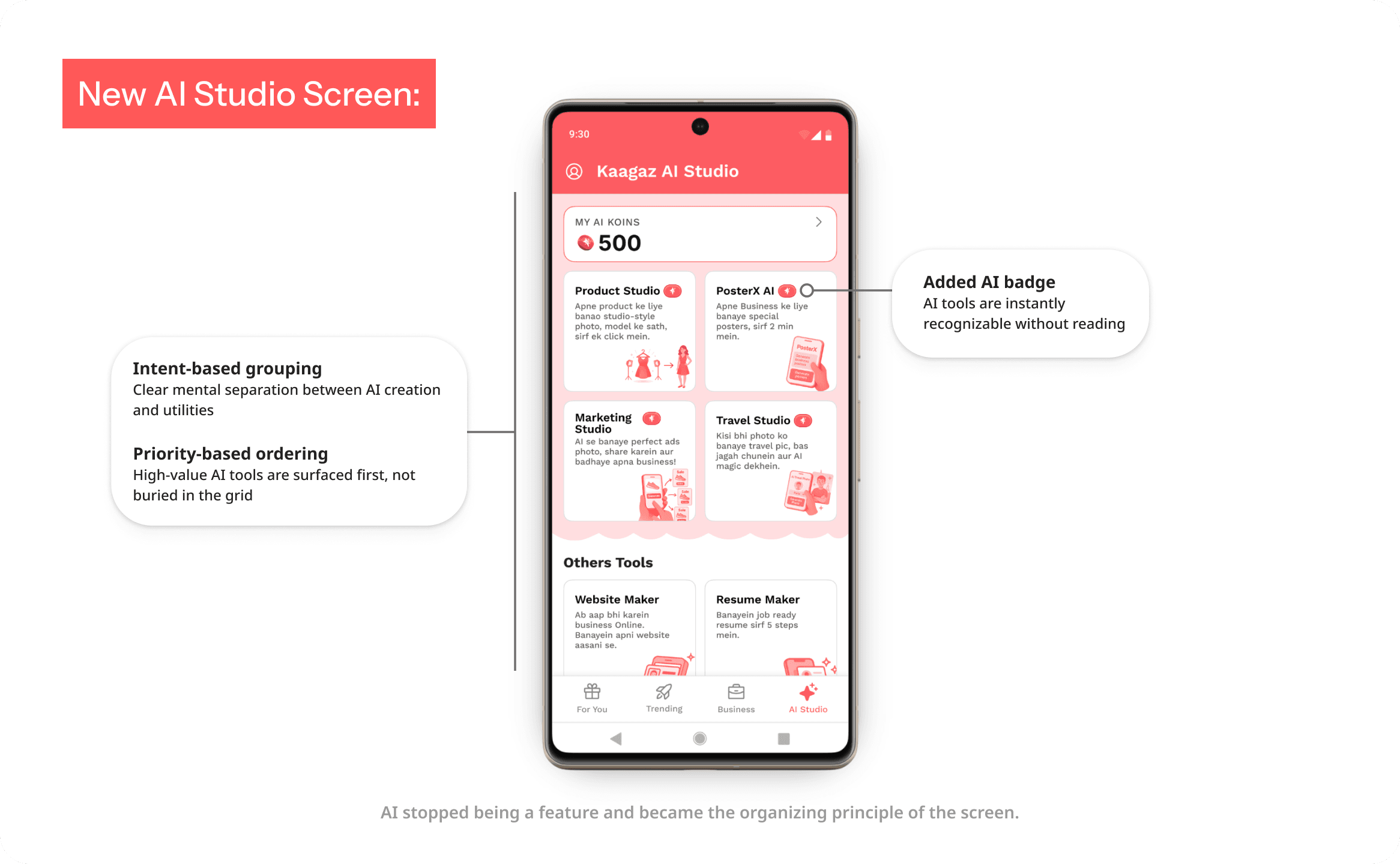
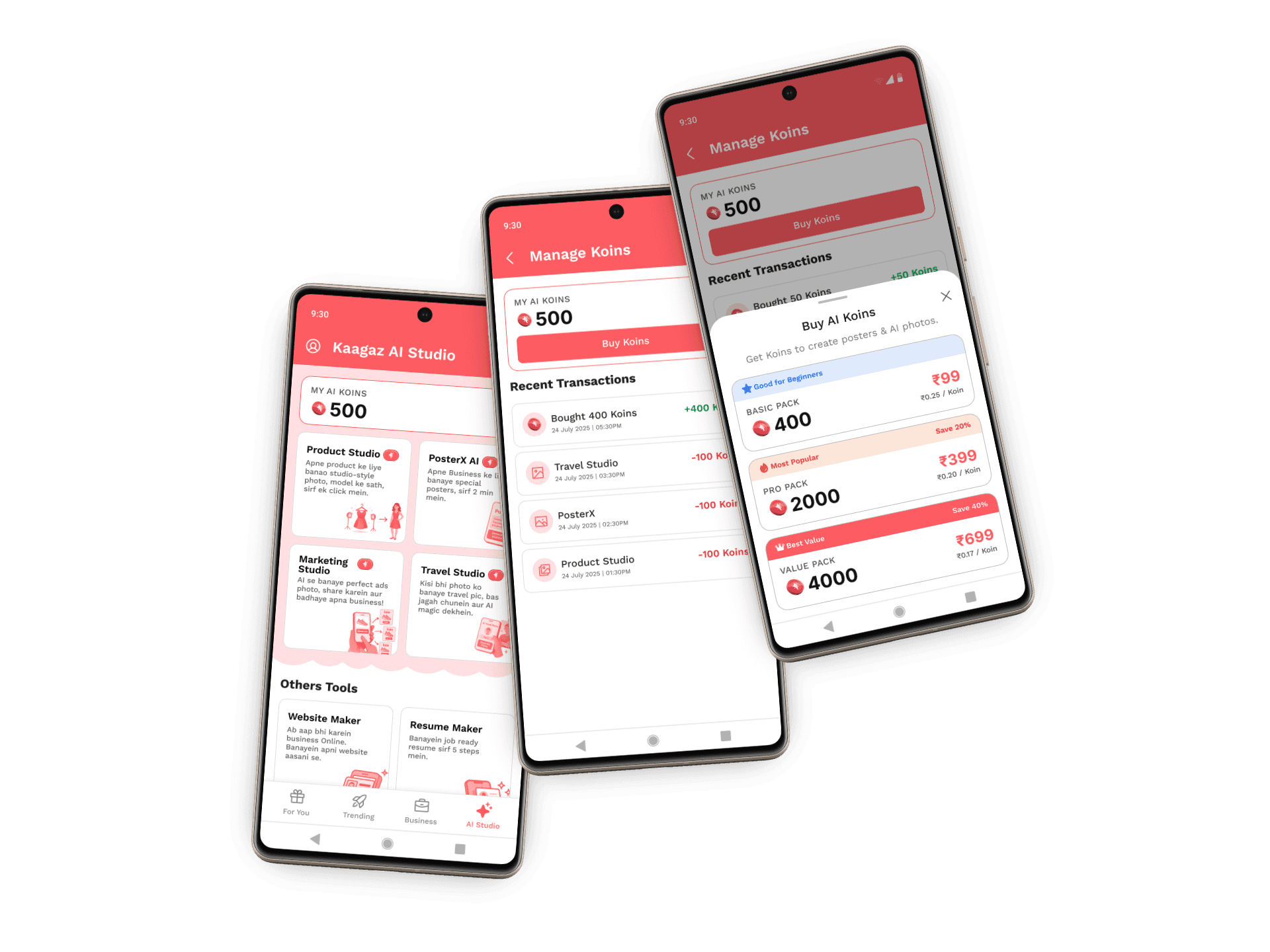
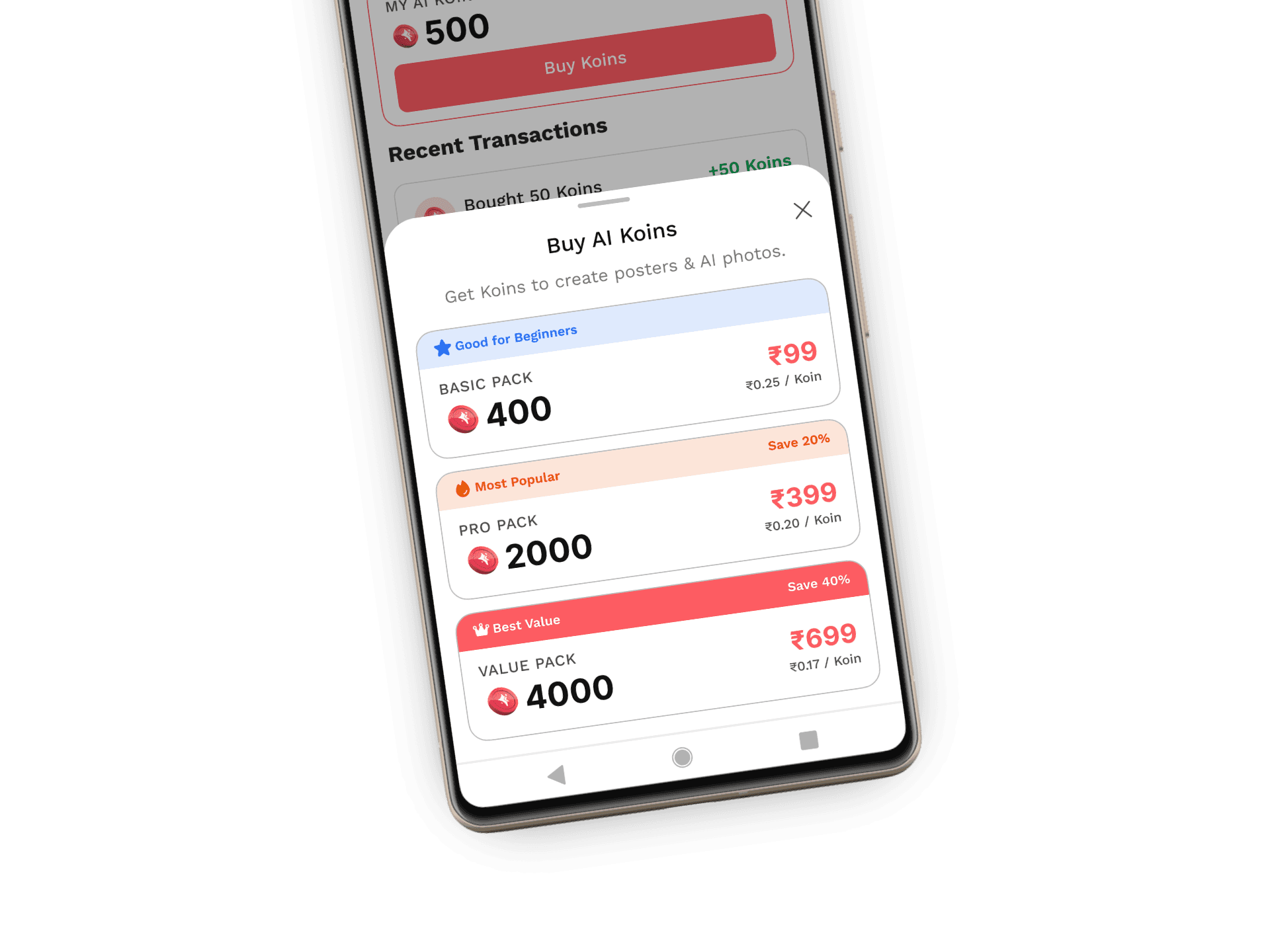
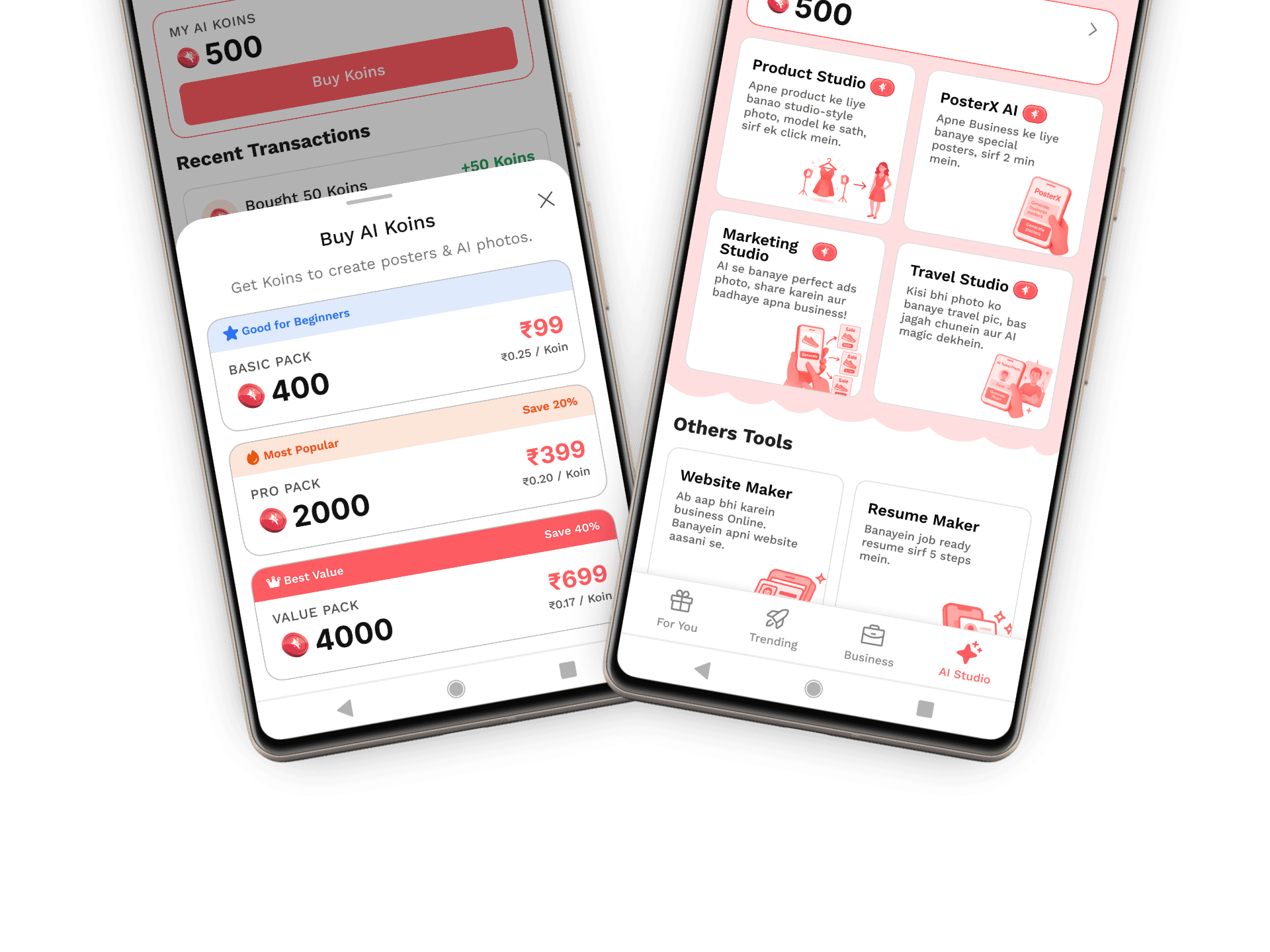
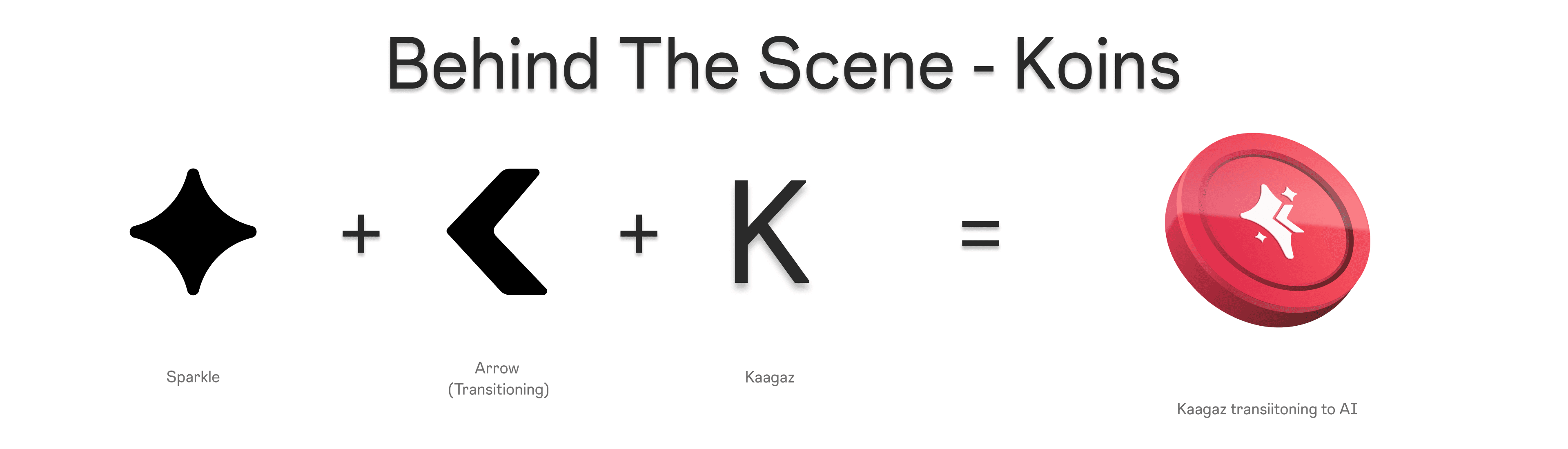
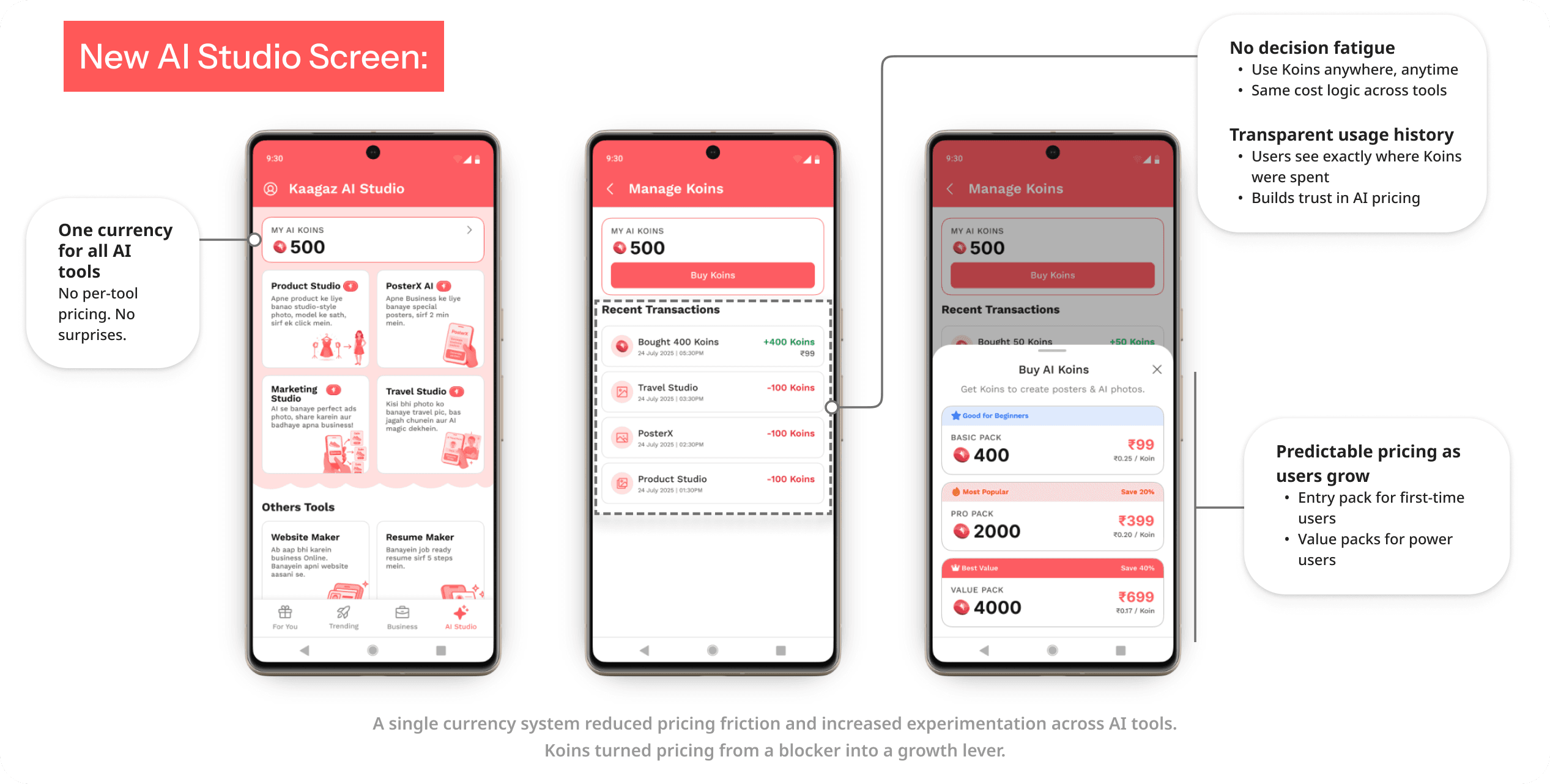
Introduced Koins: One simple system for all AI tools
Users hesitated because each AI tool had its own price. We replaced this with a single, predictable currency:
Koins
Structured Studio for Scale
Earlier, Studio felt like a random directory. As more tools were added, the grid only became more overwhelming.


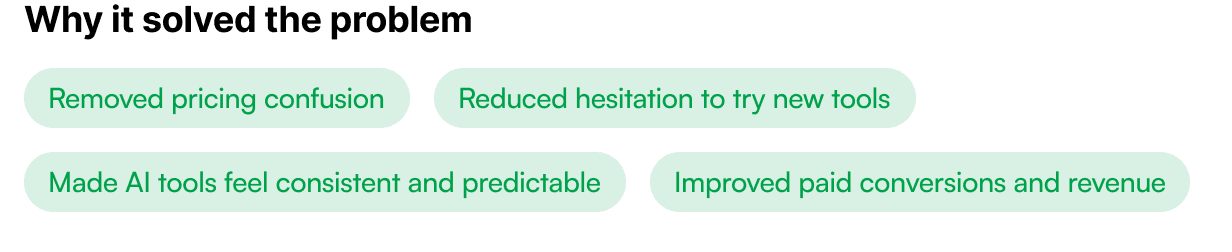
Communicated Value Upfront


Cross-functional Collaboration
This project required close collaboration across Product, Engineering, & Business to balance UX, AI feasibility, and Monetization
1️⃣ Product & Strategy (PM collaboration)
Partnered with PM to align Studio with AI-first roadmap
Helped define what should remain utility vs what should become AI-led
2️⃣ Engineering & Feasibility (Tech collaboration)
Worked closely with engineers to move AI tools from web → native
Balanced UX goals with AI latency, infra limits, and rollout speed
Iterated layouts based on what could scale technically
3️⃣ Business & Monetization (Leadership collaboration)
Collaborated with CEO to design Koins as a long-term revenue system
Weighed short-term pricing optimisation against user confidence
Used early data to validate monetization direction
How I used AI in this project
AI wasn’t just part of the product, I also used it as a tool to think, explore, and move faster during design
I used AI to:
Explore early layout and hierarchy options for Studio without over-investing in visuals
Refine copy and naming so AI-powered tools felt understandable, not intimidating
Stress-test flows by simulating different user intents and edge cases
This helped me move faster in the thinking phase, not skip it.
All core decisions information architecture, pricing logic, tool grouping, and defaults were made manually. AI outputs were treated as drafts, never final answers.
I avoided using AI for: UX trade-offs, Monetization decisions, Final interaction patterns
Those required product context, user empathy, and business judgment.
Impact

1️⃣ Product impact (behavior-level)
Studio became the primary entry point for AI tools
Users explored multiple AI tools in a single session
Drop-offs reduced after removing web redirects
AI tools felt discoverable without being promotional
2️⃣ Business impact
Paid trial conversions increased after introducing Koins
Users were more willing to experiment with AI tools due to predictable pricing
Koins created a clearer upgrade moment compared to per-tool pricing
Koins shifted monetization from “pay before you trust” to “pay after you see value”
3️⃣ Experience impact
Reduced decision fatigue when choosing AI tools
Clear separation between AI creation and utility tools
Studio felt native and trustworthy instead of promotional
Faster scanning and understanding on repeat visits
Learnings & Future Direction
What I Learned
● Visibility ≠ motivation
Placing tools at the top didn’t matter when users didn’t understand the value behind them.
● Clean UI builds trust, but trust alone doesn’t drive action
Studio v1 looked better, but deeper behavioural and pricing issues still held users back.
● Consistency matters more than complexity in pricing
Multiple pay-per-use models overwhelmed users; one simple coin system unlocked adoption.
● Users avoid anything that feels like “leaving the app”
Redirecting to web broke flow and trust immediately - native integration was non-negotiable.
● AI needs identity, not just placement
Badges, grouping, and structure helped users understand which tools were powered by AI and why they mattered.
● A screen can work… but still not be future-ready
Studio v1 succeeded in the moment but couldn’t scale with the company’s AI roadmap.
● The best solution comes after the first solution
Studio v1 wasn’t wrong - it helped us see the deeper problems we couldn’t see earlier.
Future Scope - where this is heading?
● One unified coin system across Kaagaz
Today: Kaagaz Coins (PDF app) + Koins (AI Studio).
Future: one currency for the entire ecosystem.
● A clearer identity for AI tools across the app
AI Studio becomes the centre for business creation, not just a tools list.
● AI Studio evolving into a standalone app
The long-term vision is a dedicated app that helps solopreneurs market and grow their businesses online using AI.
● A scalable framework for adding new AI tools
The new structure supports more tools without turning into a cluttered directory again.
● Stronger workflows for business growth, not just poster creation
AI Studio transitions from “tools” to “a daily workspace” for small business owners.